Introduction
For many of us, the morning routine isn’t complete without a hot cup of coffee. Whether you’re rushing out the door before work or settling in for a leisurely Sunday morning, the quality of that first cup often sets the tone for everything that follows. The challenge, however, lies in achieving consistent, satisfying results without becoming a coffee expert or spending significant time perfecting extraction techniques.
The drip coffee maker has remained a staple in American kitchens for decades precisely because it offers simplicity and predictability. When designed thoughtfully, these machines can produce genuinely good coffee without requiring the skill level or time investment of manual brewing methods. Understanding what makes a drip coffee maker effective, and which features actually contribute to better results, can help you make an informed decision about whether this type of machine fits your lifestyle and preferences.
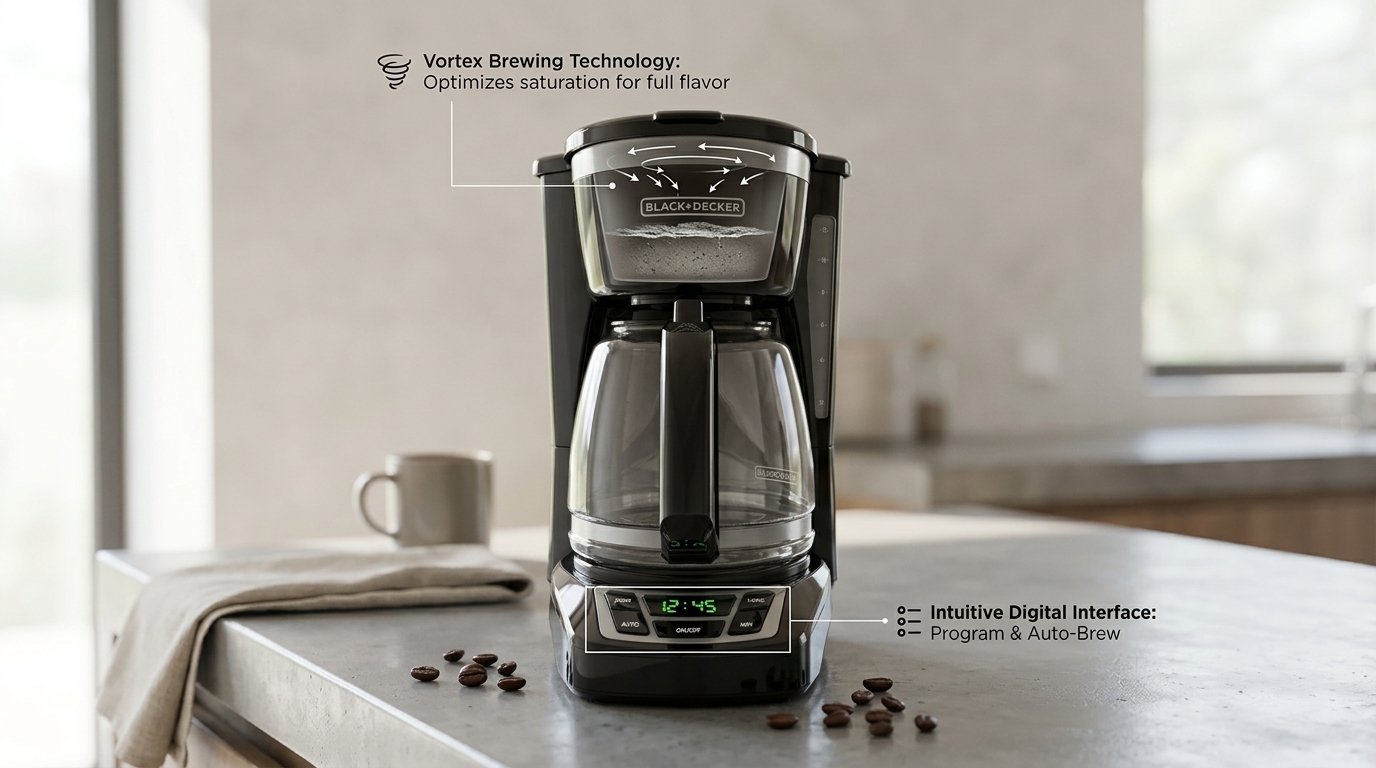
The BLACK+DECKER 12-cup model with Vortex Brewing technology and programmable features represents an evolution in mainstream coffee maker design. Rather than treating this as simply another appliance, it’s worth exploring what these features do, how they function in practice, and whether they genuinely improve the brewing experience compared to more basic alternatives.
The Evolution of Drip Coffee Makers
Before diving into specific features, it’s helpful to understand how drip coffee makers have developed. Early models were remarkably simple: water went in one side, gravity pulled it through ground coffee, and a finished cup emerged. Modern designs have refined this basic principle, addressing common problems like uneven water distribution, temperature inconsistency, and the challenge of extracting maximum flavor from coffee grounds.
The fundamental principle remains unchanged—water heated to approximately 195-205 degrees Fahrenheit passes through ground coffee to extract flavors and compounds. However, the manner in which water contacts the grounds, how long they remain saturated, and how evenly the water distributes across the coffee bed all significantly impact the final cup.
Programmable features represent a practical evolution, allowing users to set a start time and walk away, returning to fresh, hot coffee at their preferred moment. This convenience has made programmable drip makers appealing to busy households, particularly those with multiple people needing coffee at different times.
Key Features Explained
Understanding Vortex Brewing Technology
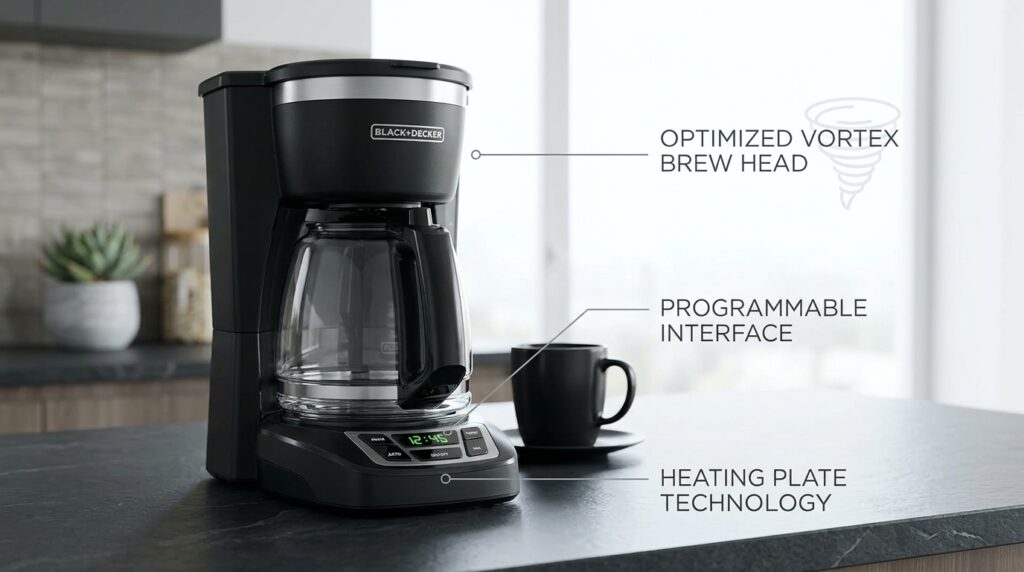
The Vortex Brewing system functions as the central technology in this machine. Rather than water simply drizzling straight down through the coffee grounds, this technology creates a swirling motion within the brewing chamber. Think of it as creating a small whirlpool effect that ensures more thorough contact between the water and grounds.
This matters because coffee extraction isn’t instantaneous. Flavor compounds need adequate contact time with hot water to dissolve. When water moves in a uniform swirl pattern rather than straight down, it maximizes the surface area of contact, promoting more complete extraction. The result is intended to be richer, more flavorful coffee that exhibits better body and taste complexity compared to what you might get from a basic drip method.
The practical benefit is that you’re not just getting hot brown water that happens to be called coffee—you’re getting a beverage where the process has been optimized to pull out more of what makes coffee taste good in the first place.
The 12-Cup Capacity
A 12-cup capacity refers to standard coffee cup measurements, which equate to approximately 60 ounces of liquid. For context, this differs from typical mug sizes. A standard coffee mug holds between 8-12 fluid ounces, so a 12-cup coffee maker produces enough for about five to six actual mugs of coffee.
This capacity makes sense for several household scenarios: serving multiple people before work, hosting casual gatherings, or brewing a quantity that allows for both immediate consumption and refrigeration of leftovers for iced coffee later. For solo drinkers or very small households, it might produce more than needed for a single session, though the programmable feature helps here—you can schedule brewing for afternoon use as well.
The larger capacity also means the machine can maintain temperature more effectively once the brewing cycle completes, since there’s more thermal mass keeping the heating plate warm.
Programmable Timer Functionality
The programmable timer is perhaps the most immediately practical feature for modern lifestyles. Rather than manually turning on your coffee maker each morning, you can set it to begin brewing at a predetermined time. This means you can wake to fresh coffee ready and waiting, or return from an errand to a fresh pot.
Setup typically involves using simple buttons to select your desired start time, similar to programming an alarm clock. The machine stores this schedule and executes it daily unless adjusted. This is distinct from more complex programmable features—you’re not scheduling multiple brewing cycles throughout the day, just setting a specific time for automatic brewing to begin.
For households with varying schedules, this becomes particularly valuable. One person can set the machine for 6 AM while another prefers coffee at 7 AM—splitting responsibility for coffee preparation.
How These Features Function Together
The combination of programmable timing with Vortex Brewing creates a specific use experience. The machine holds water overnight or during the day, then at your programmed time, it heats that water and begins the brewing cycle with the Vortex motion activated. The brewing process itself typically takes 10-15 minutes depending on the exact quantity being brewed.
Temperature maintenance is managed by a heating plate beneath the carafe. Once brewing completes, this plate keeps the coffee warm without continuing to heat aggressively, which can degrade flavor through over-extraction or burning.
Practical Applications and Use Cases
Morning Routines and Convenience
The most obvious application is the weekday morning scenario. Rather than fumbling with the coffee maker before caffeine has entered your system, you simply press power the night before, set your desired time, and the machine handles the rest. By the time you’re showered and dressed, coffee is ready.
This matters more than it might initially seem. The difference between waiting five minutes for coffee to brew and having it immediately available can influence whether you eat breakfast, miss an important call, or leave home in a rushed state of mind.
Hosting and Entertaining
When expecting guests or family for breakfast or brunch, a 12-cup machine ensures adequate supply without requiring you to make multiple brewing cycles. You can program it to finish around your expected gathering time, presenting fresh coffee alongside food without last-minute scrambling.
Secondary Brewing for Iced Coffee
Many households brew coffee in the morning and let a portion cool for iced coffee consumption later. The programmable feature allows you to brew again in late afternoon, giving fresh iced coffee rather than relying on day-old brewed coffee reheated.
Office and Workplace Settings
While personal machines are typically home-focused, some households with remote workers or small offices appreciate having a reliable machine that can produce multiple cups without attention or repeated brewing cycles.
Who This Machine May Suit
Busy Households and Professionals
If your mornings are structured around a specific timeline and you’d appreciate one fewer task to manage, a programmable machine offers genuine value. This is particularly true for households where multiple people need coffee at consistent times.
Coffee Enthusiasts Seeking Convenience
People who appreciate good coffee but live hectic lives sometimes feel caught between wanting quality and needing speed. A machine specifically designed around extraction quality (through the Vortex system) appeals to those who prioritize taste alongside convenience.
Households Serving Multiple People
Families or shared living situations where several people drink coffee benefit from having adequate capacity already prepared rather than multiple brewing cycles or people taking turns at the machine.
Those Wanting Basic Customization
Unlike truly basic coffee makers with no features, programmable machines allow some control over your daily routine. While not as granular as some premium models, having timer functionality represents a meaningful step up in convenience.
People Wanting Reliable, Straightforward Operation
If the idea of complex settings, mobile apps, or steep learning curves pushes you away from certain machines, a straightforward programmable timer with simple button controls offers functionality without overwhelming complexity.
Important Considerations Before Purchasing
Water Quality and Maintenance
Coffee quality depends partly on your water quality. Hard water (high mineral content) can affect both machine longevity and taste. Over time, mineral buildup occurs in the heating elements and tubes of any coffee maker. Periodic descaling—running a cleaning solution through the machine—extends lifespan and maintains performance.
Many users find that descaling every two to three months, depending on local water hardness, keeps machines functioning optimally. This isn’t unique to this model but represents standard coffee maker maintenance.
Carafe Durability
The carafe on a 12-cup machine is typically made of glass or thermal material. Glass offers visibility and is dishwasher safe, but can break if dropped. Thermal carafes insulate better, keeping coffee hotter longer without a heating plate, but are less common on basic drip models. Understanding what material yours has and treating it accordingly matters for longevity.
Brew Cycle Duration
Even with programmable timing, the brewing process itself takes time. If you program the machine for 6:30 AM, brewing won’t complete instantly—expect another 10-15 minutes. This means you should set your timer for when you want brewing to begin, not when you want coffee ready to drink.
Heating Plate Temperature
The heating plate that keeps coffee warm after brewing can eventually affect taste if coffee sits for extended periods. Coffee left sitting for several hours develops a stale, burnt quality. If you typically brew once and drink throughout the morning, this is fine. If you brew in the morning and don’t drink until afternoon, you might prefer cooler coffee to warm it yourself or brewing fresh closer to when you want it.
Counter Space Requirements
A 12-cup machine with a carafe occupies meaningful counter space. If your kitchen is compact, you’ll want to verify dimensions before assuming it fits your available area.
Comparing Drip Coffee Makers: General Categories
Basic Drip Makers vs. Programmable Models
Basic drip machines require manual activation each time you want coffee. They’re simpler, often less expensive, and take up less counter space. However, the convenience loss is significant if you value waking to ready coffee or want to control brewing timing without being present.
Programmable models like this one offer that timing control at a moderate additional cost. The trade-off is one more feature to set up initially and one more button interface to learn.
Standard Drip vs. Machines with Extraction Features
Many budget drip machines use simple spray head designs that distribute water fairly randomly. Machines featuring extraction-focused technologies like Vortex create more intentional water flow patterns designed to maximize flavor development.
If you primarily care about quick, hot caffeine delivery, extraction features matter less. If you’ve noticed that coffee from better machines tastes noticeably better, extraction technology becomes more relevant to your decision.
Carafe vs. Thermal Options
Some coffee makers keep the carafe on a heating plate (like most traditional models), while others use insulated thermal carafes that maintain temperature through insulation rather than heat. Heating plates are common, familiar, and affordable. Thermal carafes offer better temperature retention and eliminate the heating plate, so coffee doesn’t develop that “burnt” taste from extended warming.
This model uses a heating plate approach, which is standard and functional, though some prefer thermal alternatives.
Manual vs. Fully Programmable
The most basic programmable machines (like this model) set one wake-up time. More advanced models might allow multiple brew cycles throughout the day or offer brew strength settings. For most people, a single programmable time satisfies needs adequately.
Frequently Asked Questions
How much counter space does a 12-cup coffee maker typically require?
Most standard drip machines are roughly 10-13 inches wide and 8-11 inches deep. Verify specific dimensions before purchasing if space is limited, but these machines generally fit on standard kitchen counters next to other appliances.
Can I use regular tap water, or do I need filtered water?
Tap water works fine in most cases. However, if your local water is particularly hard (high in minerals), using filtered water reduces buildup inside the machine and may produce better-tasting coffee. Many people use basic pitcher filters for this purpose.
How often should I descale the machine?
The frequency depends on water hardness. In areas with soft water, descaling quarterly might suffice. In hard water areas, every 4-8 weeks is more typical. If you notice slower brewing or weaker coffee taste, it’s time to descale regardless of schedule.
What’s the difference between a 12-cup capacity and how many actual servings that provides?
A 12-cup capacity equals approximately 60 ounces, which fills about five to six standard coffee mugs (8-10 ounces each). Don’t confuse this with 12 mugs of coffee—it’s fewer actual servings.
Can I brew fewer than 12 cups if I don’t need a full pot?
Yes. Most machines allow you to fill the water reservoir partially for smaller quantities. The brewing time might be slightly shorter with less water to heat, but the process works the same way.
How long does the programmable timer feature actually keep fresh coffee ready?
The heating plate maintains temperature adequately for approximately two to four hours. After that, coffee quality degrades noticeably. If you program brewing for morning use but won’t drink until afternoon, you’d be better served by programming a later start time.
Is the Vortex Brewing system difficult to clean or maintain?
Cleaning is standard drip machine maintenance. The brewing chamber might have slightly different design, but it’s typically accessible for regular rinsing. Descaling with a cleaning solution flows through the system the same way water and coffee do.
What happens if I forget to fill the water reservoir?
If you set the timer but forget water, the machine will run empty through its cycle. This doesn’t damage the machine but results in no coffee. The heating elements will turn off once the cycle completes.
Can I use the machine with pre-ground coffee only, or does it work with whole beans?
Any drip machine requires ground coffee—it cannot grind beans. You’ll need either pre-ground coffee or a separate grinder if you purchase whole beans.
Is this machine good for making cold brew coffee?
No. This is designed exclusively for hot drip brewing. Cold brew requires different equipment and a multi-hour steeping process, not heated water passing through grounds.
The Value Proposition: What You’re Actually Getting
A 12-cup drip coffee maker with programmable timing and brewing technology designed for extraction sits in the middle of the coffee maker market. It’s not the most basic option (which might be a simple manual pour-over or no-frills drip machine), nor is it a super-premium machine with multiple programming options and advanced features.
What this positioning means is that you’re paying for genuine, practical functionality—not flashy additions you’ll rarely use—but also benefiting from more thoughtful design than the cheapest available option. The Vortex Brewing system represents a real attempt to improve coffee quality. The programmable timer solves a genuine inconvenience. The 12-cup capacity handles realistic household situations.
For someone who drinks coffee regularly, values both taste and convenience, and wants a machine that will operate reliably for years without requiring expertise to use, this category of machine serves its purpose well.
Making Your Decision
Choosing a coffee maker ultimately depends on your specific lifestyle, daily routine, and preferences. If you’ve been making do with a very basic machine or waiting for coffee each morning, a programmable model with extraction-focused design offers noticeable improvements. If you already have a coffee maker you’re satisfied with, you don’t need to change.
Ask yourself these questions: Do you want coffee ready when you wake up without manual intervention? Would you prefer better-tasting coffee if it required no additional time or effort? Do you serve coffee to multiple people regularly? Does a 12-cup capacity match your typical consumption patterns?
Honest answers to these questions clarify whether this type of machine fills an actual need in your life.
Conclusion
The BLACK+DECKER 12-cup drip coffee maker with Vortex Brewing represents a practical, thoughtfully designed option for people seeking convenience without sacrificing quality. The combination of programmable timing for automated brewing and extraction-focused water circulation addresses real frustrations many people experience with basic coffee makers.
Like any appliance, it’s not universally perfect—it requires counter space, generates some noise during brewing, and works only with pre-ground coffee. It won’t match the capabilities of true coffee enthusiast equipment, nor does it aim to. It serves instead as a reliable middle ground that makes consistently good coffee accessible even when you’re busy.
Understanding how these features actually function, and whether they match your household needs and daily routine, allows you to make an informed decision that you’ll feel confident about for years of morning use.