Introduction
The way people approach their morning coffee routines has shifted dramatically over the past two decades. Instead of committing to brewing a full pot, many households now prefer the flexibility and simplicity of single-serve systems. The Keurig K-Express represents one approach to this style of brewing, offering convenience without requiring extensive counter space or complicated setup procedures.
This guide explores what the K-Express brings to the table, examining its capabilities, practical applications, and the considerations that come with single-serve brewing technology. Whether you’re evaluating your first single-serve machine or comparing various options in this category, understanding how a particular model fits your lifestyle matters more than focusing on marketing claims.
What Single-Serve Coffee Makers Do
Before diving into the specifics of the K-Express, it helps to understand the fundamental appeal of single-serve systems. These machines brew individual cups of coffee directly into your mug, eliminating the need to prepare multiple servings at once. The appeal extends beyond simple convenience—people benefit from brewing fresh coffee on demand, avoiding the waste that occurs when coffee sits in a carafe, and having the flexibility to prepare different beverages for different people in the household without compromise.
The single-serve market encompasses several different approaches. Some machines use proprietary pods, others work with reusable filters, and some offer both options. Understanding where any particular model sits within this ecosystem helps contextualize its strengths and limitations.
Key Features of the Keurig K-Express
Compact Design and Footprint
The K-Express is engineered as a space-conscious machine, which appeals to apartments, offices, RVs, dormitories, and any kitchen where square footage is at a premium. Its small profile doesn’t require a dedicated corner of your counter—it can tuck into spaces that larger machines couldn’t accommodate. This practicality matters for people transitioning from manual pour-over methods or no coffee equipment at all.
The black exterior reflects contemporary kitchen aesthetics without appearing overly trendy, meaning the machine maintains visual compatibility with various design approaches. Some people appreciate that single-serve machines don’t dominate their kitchen’s visual landscape the way larger traditional machines might.
Water Reservoir Capacity
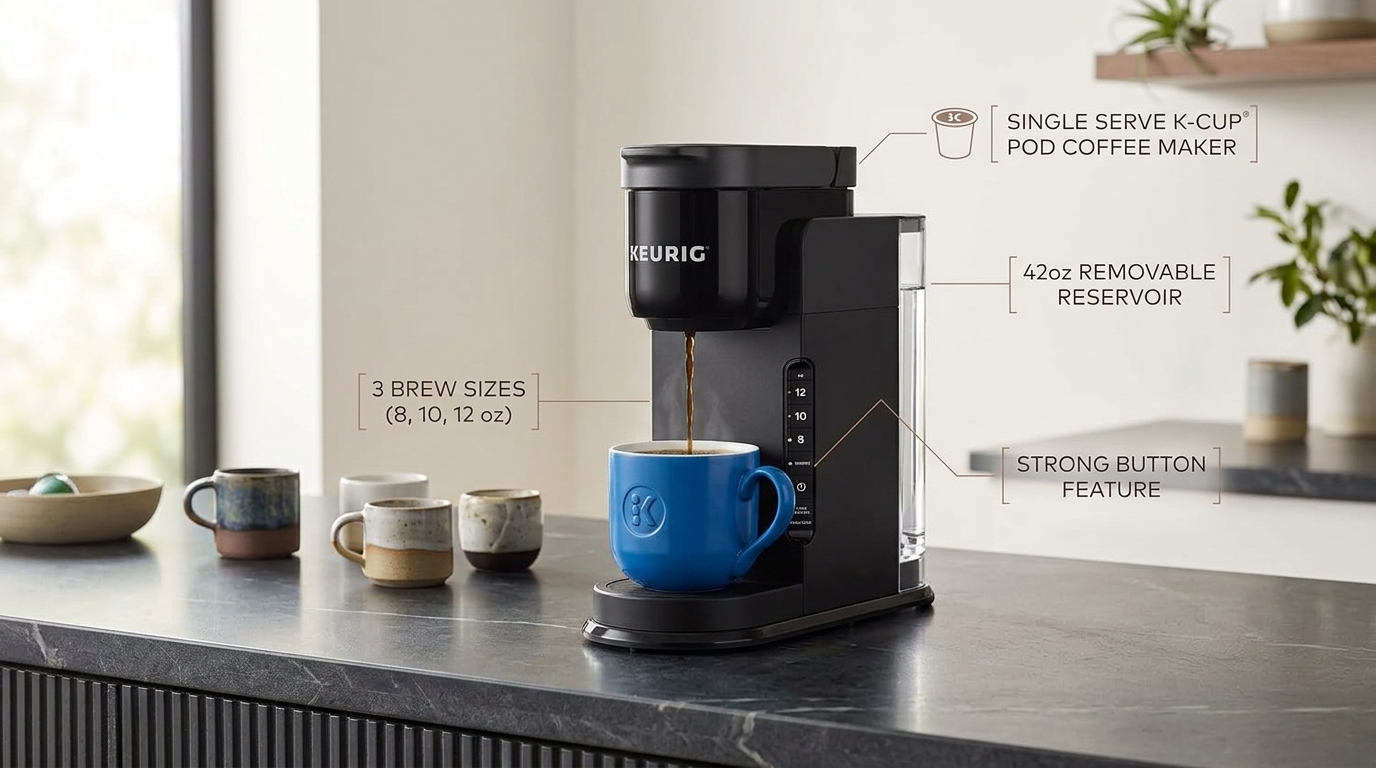
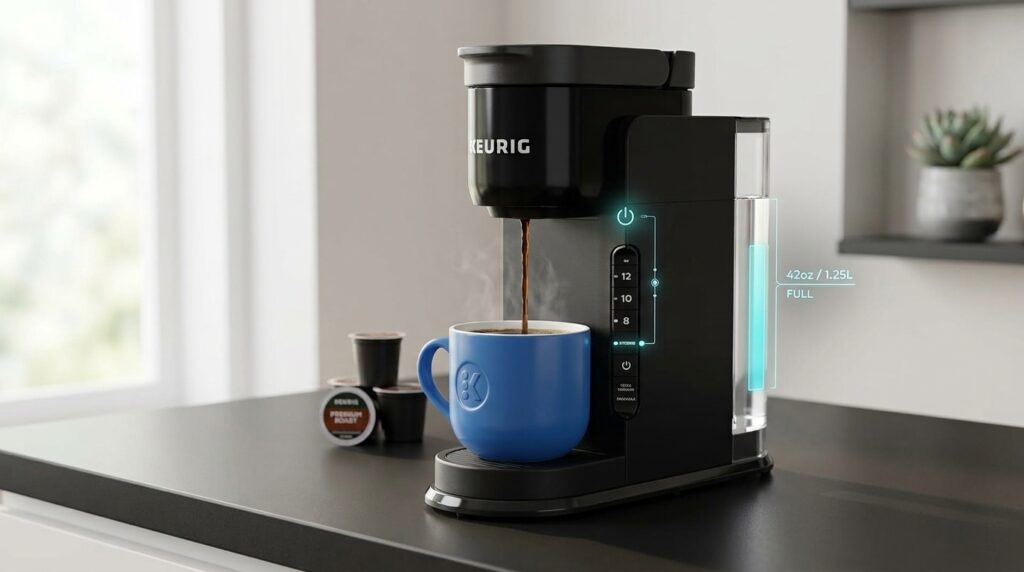
The removable 42-ounce reservoir represents a middle-ground approach to water capacity. This size falls between ultra-compact machines that require frequent refilling and larger systems designed for high-volume use. With a 42-ounce tank, you can brew several cups before needing to refill—typically around three to four cups, depending on the brew size selected.
The removable design itself deserves attention. Users can detach the reservoir for filling at the sink, rather than pouring water into a fixed tank. This minor feature influences the user experience more than some people anticipate. Accessibility and ease of refilling matter when you’re reaching for your coffee machine before fully waking up.
Three Brew Size Options
The K-Express offers three configurable brew sizes, allowing users to adjust their cup volume to match their preferences and consumption habits. Different sizes suit different times of day and different purposes. Someone might choose a smaller size for a quick morning dose before rushing out, a standard size for their mid-morning coffee ritual, and a larger size for weekend relaxation or afternoon work sessions.
The ability to vary brew sizes without changing machines, filters, or preparation methods simplifies the brewing process considerably. You’re not managing multiple devices or compromising by making too much coffee when a smaller amount would suffice.
Strong Brew Button Feature
The integrated strong button allows users to enhance the flavor intensity of their coffee without switching machines or pods. Rather than requiring a secondary device or multiple machines to accommodate different taste preferences, one person can select regular brewing while another person uses the same machine with the strong button activated.
This feature addresses a practical household reality—not everyone enjoys coffee at the same intensity level. Some people find standard brewing adequate, while others prefer a more robust flavor profile. The strong brew function typically works by extending the contact time between the hot water and the coffee grounds, extracting a fuller complement of flavor compounds.
How the K-Express Functions in Daily Life
Morning Routine Integration
Many people appreciate how single-serve machines integrate into morning routines. There’s no waiting for a full pot to brew, no leftover coffee to dispose of, and no complicated cleanup. The process moves directly from reaching for your favorite pod to having your beverage ready moments later. This efficiency appeals particularly to people who are groggy during morning hours and prefer minimal friction before their first caffeine intake.
The simplicity extends to the actual brewing process. Insert a pod, select your size, press the button, and wait briefly. There’s no measuring of grounds, no adjusting of water amounts, and no coffee filters requiring careful placement. This straightforward approach makes single-serve systems accessible to people who might find traditional brewing methods intimidating or time-consuming.
Office and Workplace Applications
Beyond residential kitchens, single-serve machines fit naturally into office environments and shared work spaces. Because they brew individual cups without producing large quantities of communal coffee, they work well where different people have different preferences and schedules. Someone stopping by their desk for an afternoon coffee doesn’t need to make arrangements with officemates or worry about wasting coffee that nobody will drink.
The compact footprint means even modest break rooms can accommodate a machine without consuming valuable real estate. The simplicity of operation means minimal training or onboarding is necessary—most people instuitively understand how to operate a single-serve machine after minimal instruction.
Entertaining and Guest Accommodation
When hosting guests or having visitors stay overnight, single-serve machines offer distinct advantages. Guests can prepare their preferred beverage at the time they want it, without imposing on the host to manage coffee preparation timing. This autonomy appeals to visitors and simplifies the hospitality equation.
The variety of available pods means you can stock several options to accommodate different preferences—caffeinated, decaffeinated, different roast profiles, and different brewing strengths—without requiring a large central machine or managing multiple brewing devices.
Gradual Consumption Patterns
Households where people consume coffee at different times of day find single-serve machines particularly practical. If you’re the only coffee drinker in your household, or if your household members have staggered schedules, brewing individual cups as needed prevents waste and ensures you’re always drinking freshly prepared coffee. This differs markedly from traditional machines where coffee sits in a carafe, gradually becoming stale regardless of whether anyone’s actually drinking it.
Who the K-Express May Be Suitable For
Apartment Dwellers and Those with Limited Space
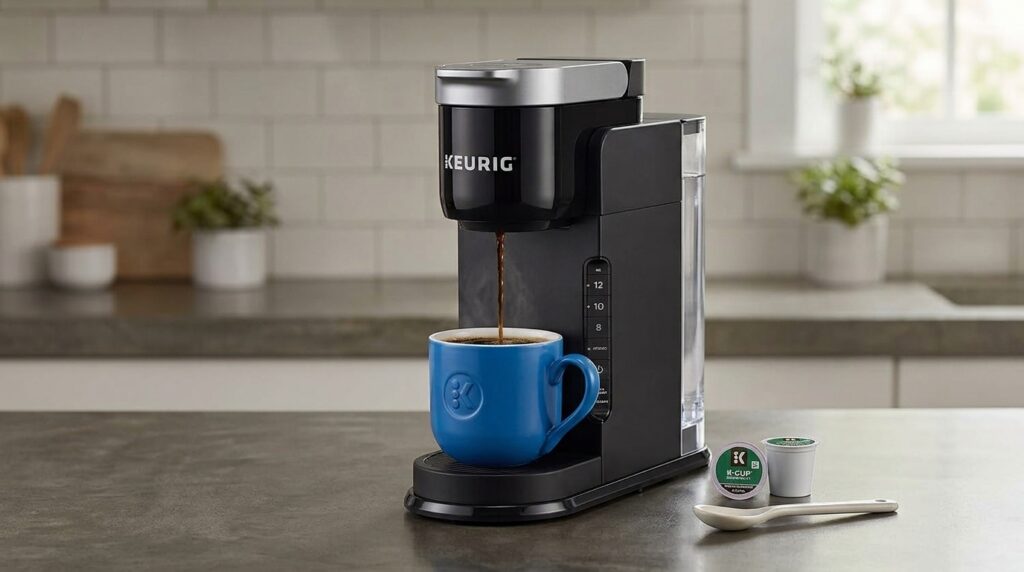
Anyone with space constraints benefits from the K-Express’s compact dimensions. Apartments with modest kitchens, tiny homes, RV owners, and people living in temporary housing all find value in machines that don’t require significant counter real estate. The ability to position the machine in a small corner, under a cabinet, or even inside a cabinet when not in use addresses real space limitations.
People Prioritizing Convenience
If your primary value lies in getting coffee quickly with minimal preparation, cleanup, and decision-making, single-serve machines align with that priority. The streamlined process and straightforward operation appeal to busy professionals, students juggling multiple commitments, and anyone whose mornings are already hectic.
Households with Diverse Preferences
Families and shared households where different members prefer different coffee strengths, varieties, and serving sizes benefit from the flexibility single-serve machines provide. Nobody needs to compromise their preferences or wait for someone else to finish brewing their version of coffee.
Those Concerned About Coffee Freshness
If you’ve experienced stale coffee from a carafe that brewed hours ago, the appeal of fresh-on-demand coffee resonates. Each cup brews individually, meaning every beverage represents fresh preparation rather than coffee that’s been sitting in any form of container.
People New to Coffee Enthusiasm
Someone developing a new interest in coffee often lacks the context and equipment to maintain a full traditional setup. Single-serve machines provide an accessible entry point—simple to operate, requiring minimal instruction, and offering enough variety to support gradual exploration of different coffee options.
Important Considerations Before Deciding
Pod-Based System Implications
The K-Express operates with proprietary K-Cup pods, which carries several implications worth examining. The pod system ensures convenience and consistency, but it also means you’re purchasing pre-packaged coffee rather than buying beans and grinding them yourself. Some people find this trade-off acceptable or even preferable; others view it as a limitation.
The environmental aspect of pod-based brewing deserves consideration. Each brewing session produces pod waste—the empty container after the coffee has been extracted. While some pods are recyclable and some companies have worked on compostable options, the cumulative impact of single-use pods differs from buying coffee in bulk or using reusable filters.
Cost Structure of Pod Brewing
Single-serve pods cost more per serving than purchasing whole beans and grinding them yourself. The convenience factor comes with a price premium—you’re paying for the packaging, pre-portioning, and the engineering that went into creating a standardized pod. Some households find this expense reasonable; others discover that over months and years, the cumulative cost becomes significant.
Additionally, the machine itself represents an initial investment. While the K-Express is modestly priced compared to some alternatives, it still requires capital outlay before you’ve determined whether the approach fits your household.
Flavor Outcomes and Coffee Quality
Single-serve machines produce respectable coffee, but they don’t necessarily produce the same results as manual brewing methods used by coffee enthusiasts. The heating time, water temperature consistency, and extraction methods differ from pour-over preparation or French press techniques. For people who’ve spent considerable time optimizing their brewing process, single-serve machines may feel like an acceptable compromise rather than an ideal solution.
The quality of the coffee beverage depends substantially on the quality of the pods you select. Not all K-Cup pods represent equal quality—flavor varies considerably based on the roaster, bean selection, and storage conditions. Exploring different pod options requires experimentation and involves trial and error.
Maintenance and Cleaning Requirements
While single-serve machines are generally low-maintenance, they do require periodic cleaning. Water lines can develop mineral deposits in areas with hard water. Manufacturers typically recommend descaling—running a cleaning solution through the machine—periodically. The frequency depends on your water’s mineral content and how often you use the machine.
Regular users should budget time and resources for descaling compounds and replacement filters if the machine includes a water filtration component. Neglecting maintenance can affect brewing performance and quality.
Noise Levels During Operation
Single-serve machines produce audible noise during the brewing process. For light sleepers or people sensitive to noise in early morning hours, this factor warrants consideration. If you’re brewing coffee while others are still sleeping, the mechanical sounds might disturb them.
Limited Customization
While the strong button and brew size options provide flexibility, you can’t adjust every aspect of the brewing process the way you could with manual methods. You can’t modify water temperature independently, adjust the brewing duration precisely, or control the extraction in granular detail. For people who enjoy tinkering with brewing variables to optimize their coffee, this represents a limitation.
Understanding Single-Serve Systems: General Comparisons
The single-serve coffee market includes various competing approaches, each with distinct characteristics worth understanding for context.
Pod-based systems like the K-Cup standard dominate the market due to their convenience and consistency. The pods provide pre-measured, sealed coffee that remains fresh until brewed. The standardization means any pod-compatible machine can brew any compatible pod.
Reusable filter systems exist for single-serve machines, where you fill a reusable basket with ground coffee and use that instead of pods. This approach offers cost savings and reduced waste, though it requires more user involvement and cleanup.
Capsule systems from other manufacturers work similarly to pods but use proprietary hardware that’s incompatible with competing brands. These systems often emphasize premium coffee sources or specialty beverages.
Manual brewing devices like pour-over systems or French presses require more active participation but offer precise control and often appeal to coffee enthusiasts who value the brewing process itself.
Drip machines with thermal carafes represent a middle ground—they brew larger quantities than single-serve machines but maintain heat better than traditional glass carafes, reducing the staleness factor.
Each approach involves trade-offs between convenience, cost, flavor control, and environmental considerations. The K-Express represents a particular point along this spectrum—prioritizing simplicity and compact design over maximum flavor customization or minimum cost per serving.
Frequently Asked Questions
How long does the brewing process take?
Most K-Cup machines, including the K-Express, brew a cup in approximately two to three minutes from the moment you press the button. This includes time for the machine to heat water, extract the coffee, and dispense it into your mug. The actual brewing time is typically brief—perhaps thirty to forty-five seconds—with the remainder of the time spent on heating and machine operations.
Can you use non-Keurig pods in the K-Express?
The K-Express works with K-Cup compatible pods. While most pods are manufactured by Keurig, some third-party manufacturers produce compatible pods as well. Compatibility varies, and attempting to use incompatible pods can potentially damage the machine. Checking product specifications before purchasing non-Keurig pods prevents compatibility issues.
What’s the difference between different brew sizes?
The K-Express typically offers sizes around 6 ounces, 8 ounces, and 10 ounces, though specific sizes may vary. Smaller sizes concentrate the coffee flavor into less liquid, creating a stronger taste. Larger sizes dilute the same amount of coffee into more water, producing a milder beverage. You can select the size that matches your preference without changing pods or machines.
Does the strong button produce noticeably different coffee?
Yes, most users notice a difference when using the strong button. The flavor becomes more pronounced and robust. The degree of difference depends on the specific pod being used—some pods show more dramatic differences than others. It’s largely a matter of personal preference whether the difference justifies the extra time required.
How often should you clean the machine?
For regular users, descaling every three to six months is typical, though hard water areas might require more frequent cleaning. Daily users might perform this maintenance more often. The machine may indicate when descaling is necessary, or you can follow the manufacturer’s recommended schedule. Regular cleaning prevents performance degradation and extends machine lifespan.
What water temperature does the K-Express use?
The machine heats water to approximately 195 to 205 degrees Fahrenheit—the temperature range most commonly used for coffee brewing. This represents a standard that balances extraction efficiency with preventing water from becoming so hot that it damages coffee compounds.
Is the reservoir temperature-controlled?
The K-Express reservoir is not heated. Water sits in the removable tank at room temperature until the machine draws it into the brewing chamber where it’s heated. This design choice keeps the machine compact and reduces energy consumption compared to systems that maintain heated water in a large reservoir.
Can you use the K-Express for hot water only?
Some Keurig machines allow you to dispense hot water without using a pod, which some users employ for tea preparation. However, this capability varies by model, so checking the specific K-Express manual confirms whether this feature is available.
How long do pods stay fresh?
K-Cup pods maintain quality for an extended period when stored in cool, dry conditions. Most manufacturers recommend using pods within six to twelve months of production for optimal flavor, though they typically don’t become dangerous or unusable after that timeframe—flavor quality simply gradually declines.
What’s the machine’s lifespan?
Single-serve machines typically function reliably for several years with appropriate maintenance. The lifespan depends on usage frequency, water quality in your area, and how consistently you perform maintenance. Heavy daily users might find their machines lasting three to five years, while casual users might have machines that operate for seven years or longer.
Making Your Decision
Choosing whether a single-serve machine fits your needs involves honest assessment of your priorities. If convenience and simplicity rank highly, and you don’t object to the cost-per-serving economics of pod-based brewing, single-serve systems offer genuine practical advantages.
If you’re an apartment dweller or someone with limited space, compact machines like the K-Express address real constraints. If your household includes people with different coffee preferences or schedules, the flexibility single-serve systems provide resolves genuine complications.
However, if you’re primarily motivated by minimizing cost, maximizing flavor customization, or reducing your environmental impact from disposable packaging, the limitations of single-serve pod systems become more significant considerations.
The K-Express specifically targets people prioritizing simplicity and compact design. It doesn’t attempt to deliver the flavor sophistication that manual brewing methods can provide, nor does it compete on cost-per-serving with traditional drip machines and bulk coffee purchasing. It occupies a specific niche—the intersection of convenience, modest space requirements, and adequate coffee quality.
Conclusion
The Keurig K-Express represents a pragmatic approach to single-serve coffee brewing. It handles its intended purpose straightforwardly—getting a cup of coffee prepared quickly without requiring significant counter space or complicated operations. The three brew sizes, strong button feature, and removable reservoir address practical usage patterns that matter to its target audience.
Whether this machine aligns with your household depends on your priorities. Those seeking convenient, quick coffee in a compact footprint should find it genuinely functional. Those prioritizing cost efficiency or maximum flavor control should understand what compromises they’re accepting.
The single-serve coffee market continues evolving, with ongoing developments in pod sustainability and brewing technology. Evaluating any machine means honestly assessing your usage patterns, space constraints, budget considerations, and preference for convenience versus customization.